
How Every Element of Design Shapes the Success of Your Promotional Products
Discover how applying key design elements to promotional products helps Australian businesses create branded merch that truly stands out.

Written by
Mia Chen
Branding & Customisation
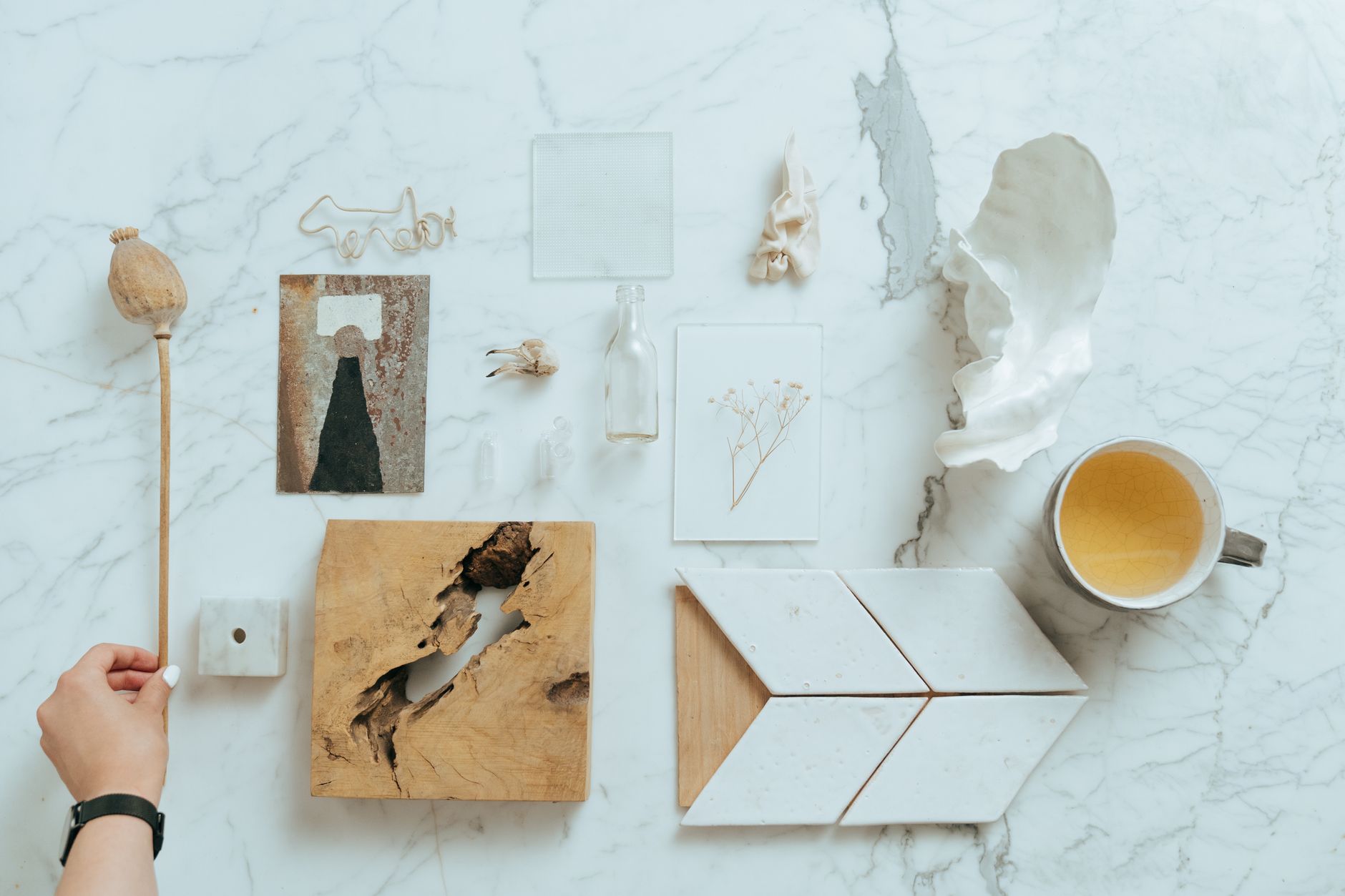
When it comes to branded merchandise and corporate gifts, the difference between a product that gets used every day and one that ends up in the bin often comes down to a single factor: design. Specifically, it comes down to how well each element of design has been applied to the artwork, layout, and overall aesthetic of the product. Whether you’re a marketing agency briefing a supplier on conference bags, a reseller helping a client choose their next round of staff uniforms, or an in-house marketing manager sourcing promotional items for a Sydney product launch, understanding design fundamentals will help you brief better, communicate more clearly with decorators, and ultimately produce merchandise that people actually want to keep.
Why the Element of Design Matters in Promotional Products
Design is not just about making something look pretty. In the world of branded merchandise, every design choice carries a practical consequence. The wrong font might render illegibly on a 20mm imprint area. A colour that looks bold on screen might appear washed out after sublimation. A cluttered layout might confuse the eye on a compact item like a printed water bottle or a personalised bottle opener.
The seven classical elements of design — line, shape, colour, texture, space, form, and typography — are not abstract art school concepts. They are the practical building blocks of every piece of artwork that gets sent to a decorator. Suppliers across Melbourne, Brisbane, and Perth deal with artwork files every day, and the strongest briefs they receive are always from clients who understand how these elements interact with different decoration methods and product surfaces.
For resellers and marketing agencies in particular, being fluent in design fundamentals translates directly into fewer reprints, fewer client complaints, and stronger profit margins.
Breaking Down Each Element of Design for Branded Merch
Colour
Colour is arguably the most emotionally powerful element of design, and it is also the one most frequently misunderstood in the context of promotional products. Not all decoration methods reproduce colour in the same way. Screen printing uses spot colours (typically matched to Pantone or PMS references), which means you need to specify exact colour codes rather than relying on a digital preview. Sublimation, on the other hand, can reproduce photographic full-colour artwork, but it only works on light-coloured, polyester-based substrates.
When briefing a supplier on promotional tote bags or promo cooler bags, always ask how many colours are included in the standard setup fee and whether there are additional charges for extra PMS matches. A seemingly simple two-tone logo can become a budget issue if the supplier counts each colour as a separate screen.
Typography
Typography is far more than picking a font you like. On branded merchandise, legibility is paramount. Thin script fonts that look elegant in a brand style guide can become unreadable when embroidered onto a polo shirt at 10mm height. Similarly, condensed sans-serif fonts can compress further under heat transfer and lose their distinctiveness.
For products with a small imprint area — think personalised Christmas baubles or shot glasses — it’s worth simplifying your artwork to a wordmark or icon only, rather than trying to include a tagline. The best rule of thumb is: if you can’t read it clearly at actual product size on screen, the decorator won’t be able to reproduce it well either.
Line and Shape
Lines define structure and guide the eye across a design. Shapes create recognition — they are the visual containers for logos, icons, and layout. When applying artwork to irregularly shaped products, the relationship between lines, shapes, and product surface becomes critical.
Consider a USB extender cable or a phone power bank charger. These items often have a narrow or curved print area, which means complex geometric shapes in a logo may need to be simplified or repositioned. Circular logos often need to be reworked as horizontal lockups for products with a rectangular print area.
Space (White Space)
Space — often called white space or negative space — is the breathing room around and between design elements. In promotional products, space is one of the most underused tools available. Crowding a design with multiple logos, taglines, websites, phone numbers, and social handles looks amateur and makes the overall piece harder to read at a glance.
For corporate gifting campaigns, less is more. A well-spaced logo on a hooded towel or a clean wordmark on the chest of an embroidered polo creates a far more premium impression than a cluttered, information-dense design. If your client wants multiple pieces of contact information, consider whether a secondary smaller imprint area (such as the hem, back neckline, or base of a drinkware item) might be a better solution.
Texture and Form
Texture and form become especially relevant when thinking about three-dimensional products. Embroidery adds a physical texture to fabric items — it raises above the surface and catches light in a way that flat printing cannot replicate. This tactile quality is part of why embroidered workwear and uniform pieces feel more premium, and it’s worth discussing with clients who are ordering hi-vis vests for a construction team or R.M. Williams shirts for a corporate gifting campaign.
For awards, trophies, and engraved items, form is the product itself. The three-dimensional shape of the item is the canvas, and the artwork must respect the curves, angles, and surface depth rather than fight against them. Laser engraving, for example, is better suited to simple, bold artwork because fine detail can get lost in the engraving process.
Applying Design Principles to Specific Product Categories
Apparel and Textiles
Apparel is one of the most design-intensive promotional product categories. Whether it’s shirt embroidery on a staff uniform or a sublimated print across the full back of a sports shirt, the interaction between design elements and fabric is complex. Colour behaves differently on cotton versus polyester. Texture changes after washing. And form — the three-dimensional shape of a garment — means that a design must flow naturally around seams, pockets, and collars rather than sitting awkwardly across them.
For products like hooded adult towels or personalised beach towels, full-coverage sublimation allows for expressive, vibrant designs. In these cases, the designer has far more creative latitude to use all seven design elements together for maximum visual impact.
Bags and Travel Accessories
Bags offer multiple panels, which means there are more surfaces to consider. The front panel is usually the hero — it carries the main logo or brand message. Side panels, inner linings, and zips are secondary touchpoints. When designing for small cool bags or travellers bags, it’s worth considering how the elements of design translate to each surface separately.
For travel accessories such as a traveller’s first aid kit, clarity and simplicity are key. The product already has a clear functional purpose, so the design should reinforce the brand without competing with the item’s utility.
Seasonal and Gift Items
For seasonal gifting campaigns — such as Mother’s Day gifts or end-of-year corporate hampers — design needs to balance brand identity with the emotional register of the occasion. This is where colour psychology becomes especially important. Warm tones communicate warmth and gratitude; cool neutrals suggest sophistication and calm.
Personalised items like personalised dog collars or personalised dog collars for Australian buyers are popular in lifestyle brand gifting. Here, the element of design most critical is typography — because the personal name or text is the hero of the design, legibility and font choice carry extra weight.
Practical Tips for Briefing Designers and Suppliers
Understanding design elements gives you a significant advantage when managing promotional merchandise projects. Here are some practical ways to put that knowledge to work:
Brief with specifics, not vague descriptors. Instead of saying “make it look clean,” specify what you want: “limit the design to two PMS colours, use no font smaller than 8pt, and ensure at least 3mm of clear space around all text.”
Request a product-scaled proof before approving. Many suppliers provide artwork proofs that are not to scale. Always ask for the artwork to be shown at the actual imprint size on the actual product before you sign off.
Understand MOQ implications for multi-colour designs. Screen printing with three or more colours typically requires higher minimum order quantities (often 50–100 units) to offset setup costs. For smaller runs, digital printing or laser engraving may be more cost-effective.
Match the decoration method to the design. Not every element of design reproduces equally well across all methods. If your artwork relies on gradients or photographic imagery, sublimation or digital printing will serve you better than screen printing or embroidery.
Communicate file formats early. Suppliers typically require vector artwork (AI, EPS, or PDF) for screen printing and embroidery. Raster files (JPEG, PNG) are only suitable for methods like UV printing or sublimation where pixel density is maintained at production size.
Conclusion: Key Takeaways
Applying a thoughtful understanding of every element of design to your branded merchandise projects is one of the most practical things you can do to improve outcomes — whether you’re a reseller, agency, or business owner. Design is not a final step in the ordering process; it is a foundational one.
Here are the most important points to carry forward:
- Each element of design — colour, typography, line, shape, space, texture, and form — directly affects how artwork interacts with a product’s surface and decoration method.
- Simplicity almost always outperforms complexity on small or irregularly shaped promotional items.
- Matching your artwork to the correct decoration method is as important as the design itself.
- Briefing suppliers with specific, design-literate language reduces errors, speeds up approvals, and improves the final product.
- Understanding design fundamentals positions resellers and agencies as expert partners rather than just order-takers, adding genuine value to client relationships.
Design-smart sourcing is what separates memorable branded merchandise from forgettable giveaways — and in a competitive market, that difference is worth every bit of effort.